

Introduction
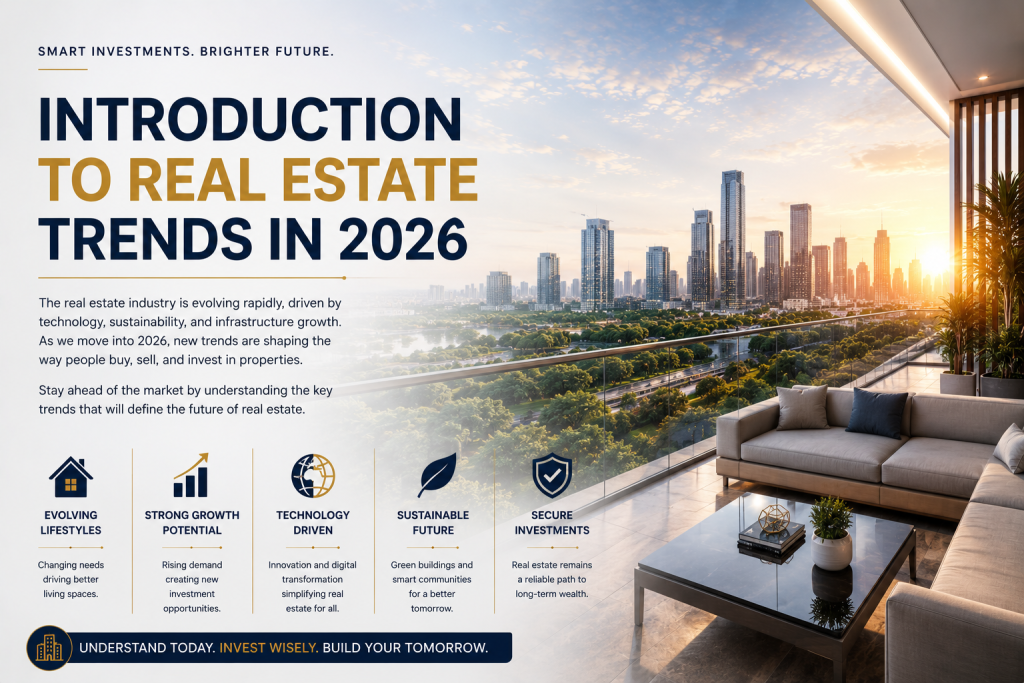
The real estate industry is evolving rapidly, driven by technological innovation, changing buyer preferences, and large-scale infrastructure development. In 2026, the Indian property market is expected to become more transparent, sustainable, and digitally connected than ever before. Homebuyers and investors are no longer focusing only on property prices; they are also considering smart technology, environmental sustainability, connectivity, and long-term value before making investment decisions.
Government initiatives, expanding metro networks, expressways, smart cities, and digital property platforms are transforming how people buy and sell real estate. Whether you are planning to purchase your dream home or invest for future returns, understanding the latest market trends can help you make informed decisions. In this guide, we explore the most important real estate trends expected to shape the Indian property market in 2026.
Smart Homes Are Becoming the New Standard
Smart home technology is becoming one of the biggest trends in the real estate industry. Buyers now prefer homes equipped with intelligent features such as smart lighting, automated security systems, digital door locks, voice-controlled appliances, and energy-efficient devices. These technologies improve convenience, enhance security, and reduce electricity consumption, making modern homes more attractive to buyers.
Developers across India are increasingly integrating smart home features into new residential projects to meet growing consumer demand. Properties with advanced automation not only provide a better living experience but also command higher resale value and rental demand. As technology continues to evolve, smart homes are expected to become a standard feature rather than a luxury in 2026.
For investors, purchasing properties with modern smart features can increase long-term value and attract technology-conscious buyers. This trend reflects the growing importance of innovation in shaping the future of Indian real estate.

Sustainable and Green Buildings
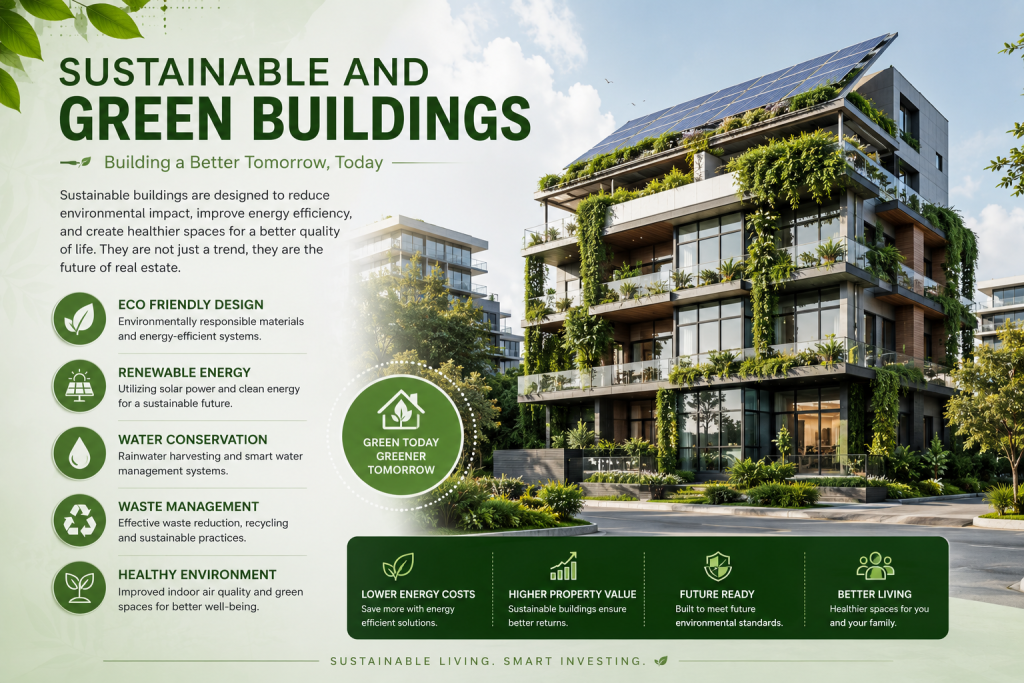
Sustainability has become one of the most important trends in the real estate industry. In 2026, homebuyers are showing greater interest in environmentally friendly properties that reduce energy consumption and promote a healthier lifestyle. Green buildings are designed with eco-friendly construction materials, efficient insulation, rainwater harvesting systems, and energy-saving technologies that minimize environmental impact while lowering utility costs.
Real estate developers are increasingly incorporating features such as rooftop solar panels, LED lighting, smart water management systems, waste recycling facilities, and landscaped green spaces into residential projects. These sustainable initiatives not only reduce maintenance expenses but also improve the overall quality of living for residents. As environmental awareness continues to grow, green-certified buildings are becoming more attractive to buyers and investors.
Properties built with sustainable practices also enjoy higher resale value because they meet future environmental standards and offer long-term cost savings. Investing in green buildings is no longer just an environmental choice—it has become a smart financial decision for modern property buyers.
Growth of Tier-2 and Tier-3 Cities
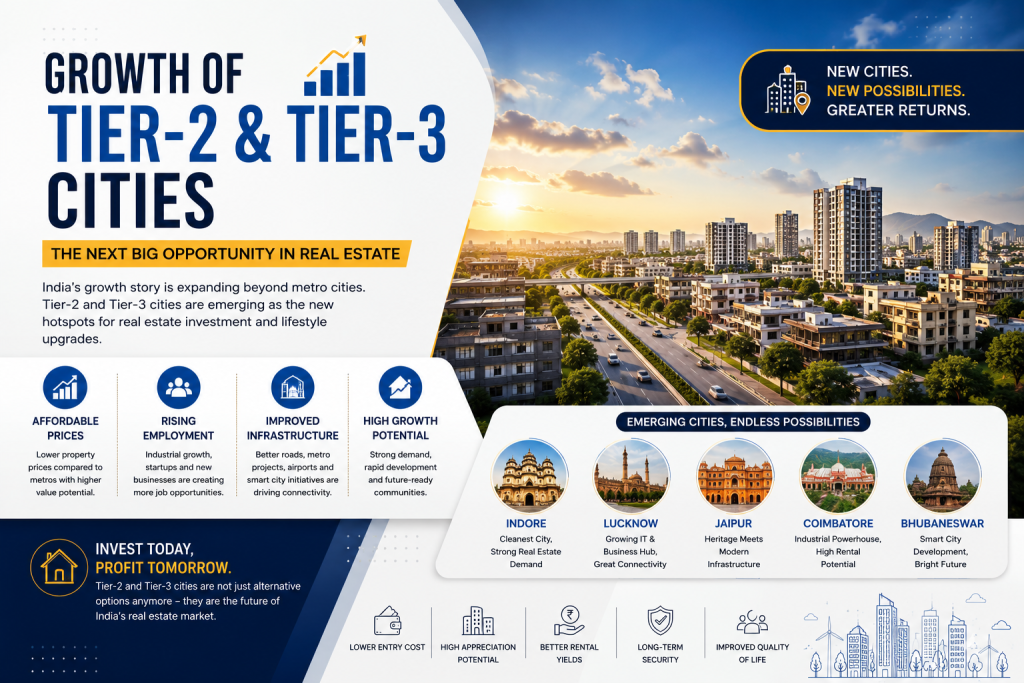
The rapid growth of Tier-2 and Tier-3 cities is creating new opportunities for real estate investment across India. Improved infrastructure, expanding industries, and better employment opportunities are encouraging people to move beyond major metropolitan cities. As a result, cities such as Indore, Lucknow, Jaipur, Coimbatore, Chandigarh, and Bhubaneswar are witnessing increasing demand for residential and commercial properties.
Compared to metro cities, these emerging markets offer more affordable property prices while providing strong potential for future appreciation. Government investments in highways, airports, metro projects, and industrial corridors are further accelerating development in these regions. This makes them attractive destinations for first-time buyers as well as long-term investors.
As businesses expand into smaller cities and remote working continues to grow, Tier-2 and Tier-3 markets are expected to play a significant role in India’s real estate future. Early investments in these developing locations can generate substantial returns over the coming years.
Digital Property Buying and AI
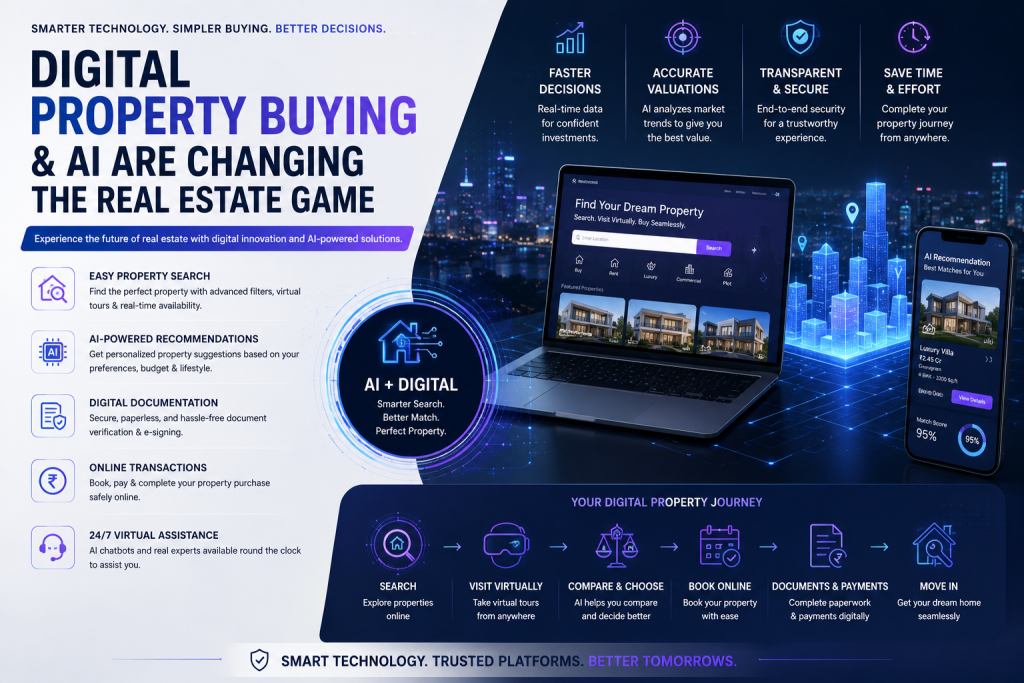
Technology is transforming the way people search for and purchase real estate. In 2026, digital property platforms powered by Artificial Intelligence (AI) are making property buying faster, easier, and more transparent. Buyers can now compare properties, explore virtual tours, schedule site visits, and complete documentation online without unnecessary delays.
AI-powered recommendation systems analyze buyer preferences, budgets, locations, and investment goals to suggest the most suitable properties. Virtual reality (VR) and augmented reality (AR) allow buyers to experience homes remotely before visiting the actual site, saving both time and travel costs.
Digital documentation, online loan approvals, e-KYC verification, and secure online payments have further simplified the home-buying process. As technology continues to advance, AI-driven property platforms will become an essential part of the real estate industry, offering greater convenience and confidence to buyers.
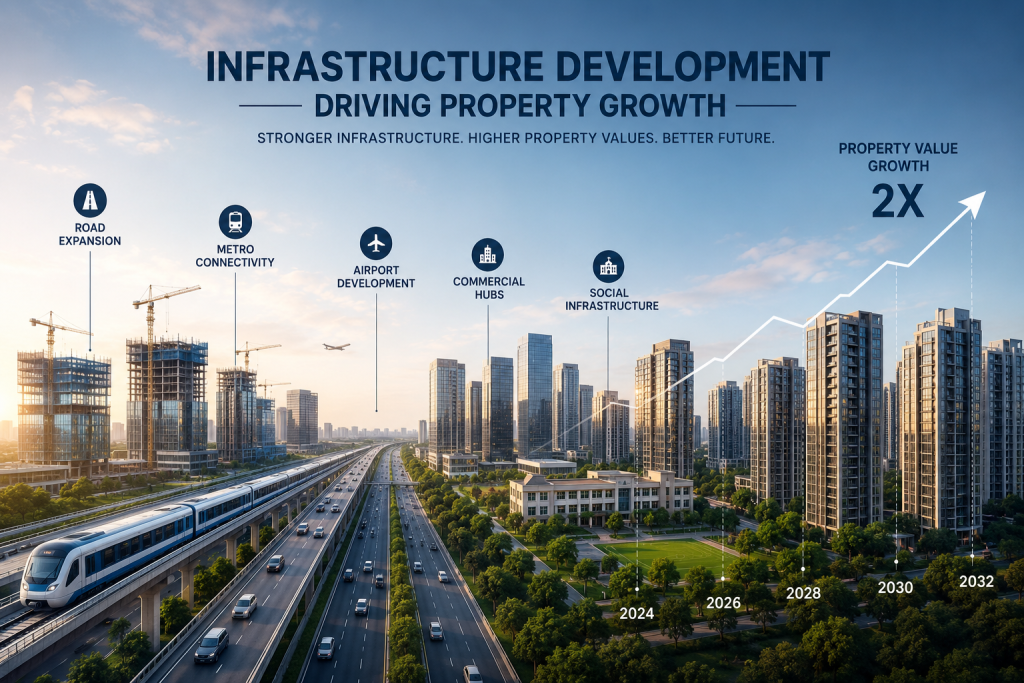
Infrastructure Development Driving Property Growth
Infrastructure development remains one of the strongest drivers of real estate growth in India. Large-scale government projects such as expressways, metro rail networks, airports, railway modernization, and smart city initiatives are significantly increasing the value of nearby properties. Improved connectivity makes residential and commercial developments more accessible and desirable.
Areas located near upcoming infrastructure projects often experience rapid appreciation due to increasing demand from homebuyers, businesses, and investors. Better transportation networks reduce travel time, improve accessibility, and encourage economic growth, making these locations highly attractive for property investment.
Investors who identify developing infrastructure corridors at an early stage often benefit from substantial long-term capital appreciation. Monitoring government development plans and future connectivity projects is therefore an important strategy for making profitable real estate investments.
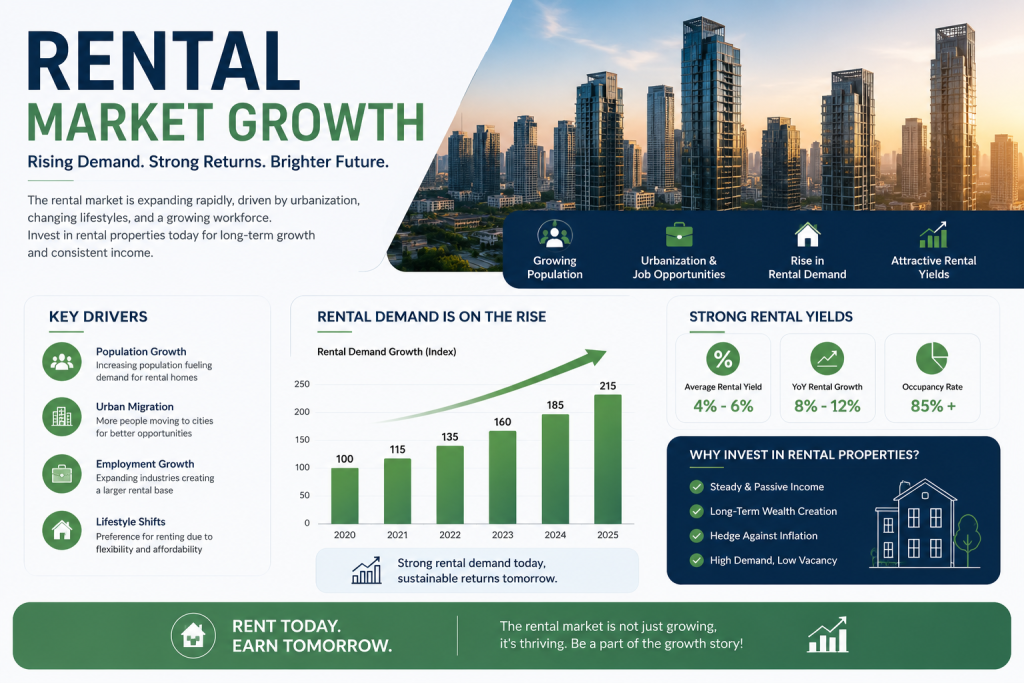
Rental Market Growth
The rental housing market is expected to grow significantly in 2026 as more professionals, students, and working families prefer flexible living options. The increasing number of job opportunities in major cities and expanding business hubs has created strong demand for rental properties. This trend provides excellent opportunities for property owners to generate a steady source of passive income.
Modern tenants are looking for well-maintained homes with quality amenities, security, high-speed internet, parking, and easy access to public transportation. Fully furnished apartments and co-living spaces have also become increasingly popular among young professionals. Property owners who offer modern facilities are likely to enjoy higher occupancy rates and better rental yields.
For investors, rental income provides financial stability while allowing the property’s value to appreciate over time. As urbanization continues to increase, rental properties will remain one of the most reliable investment options in the Indian real estate market.
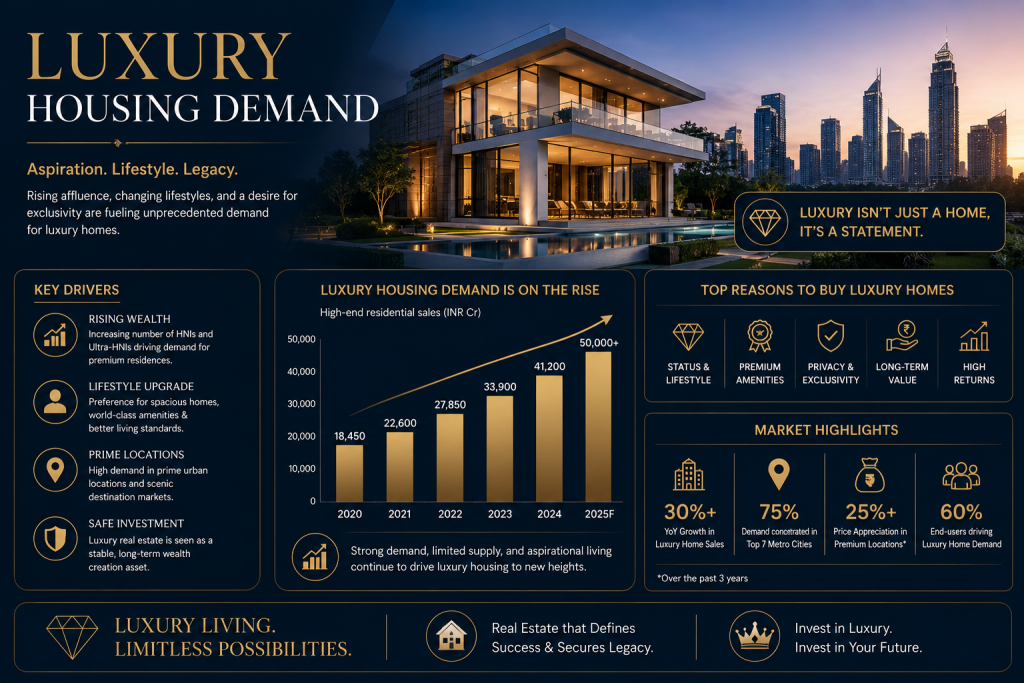
Luxury Housing Demand
The demand for luxury homes continues to rise as high-income professionals, entrepreneurs, and Non-Resident Indians (NRIs) invest in premium real estate. Buyers are looking for spacious residences that combine modern architecture, advanced technology, and world-class amenities. Luxury developments now focus on providing an exclusive lifestyle rather than simply offering larger homes.
Premium residential projects include facilities such as private clubhouses, infinity swimming pools, smart home automation, wellness centers, landscaped gardens, concierge services, and high-end security systems. These features improve both the living experience and the long-term market value of the property.
Luxury real estate has become an attractive investment because premium properties often maintain strong demand and offer better appreciation over time. As disposable incomes continue to rise, this segment is expected to remain one of the fastest-growing sectors in India’s property market.
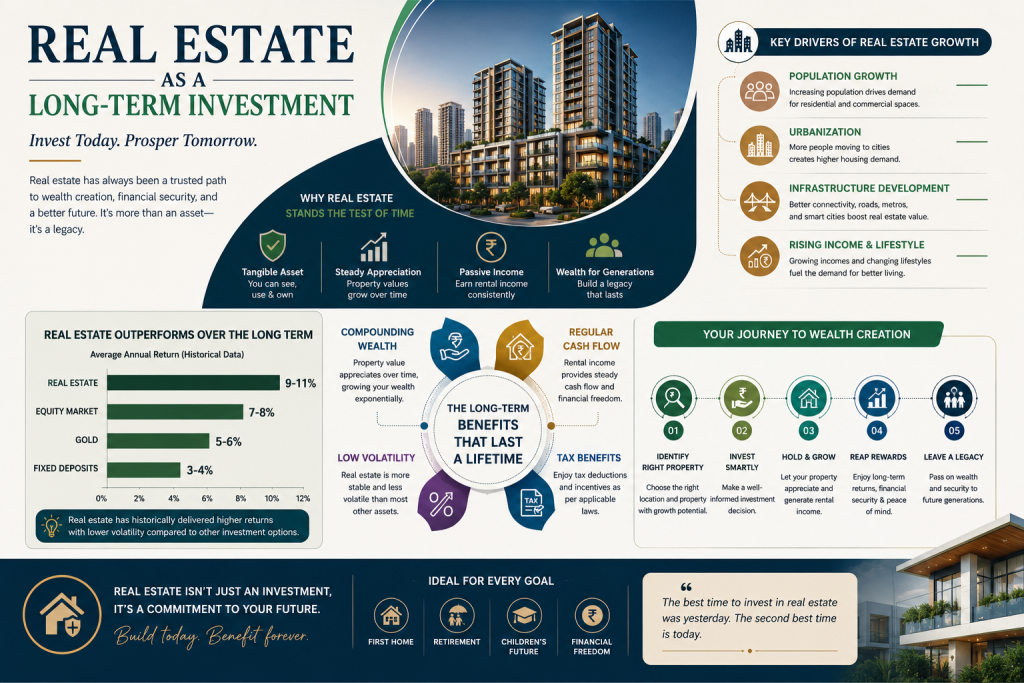
Real Estate as a Long-Term Investment
Real estate continues to be one of the safest and most rewarding long-term investment options. Unlike many short-term investments, property offers both capital appreciation and the opportunity to earn regular rental income. Well-located properties generally increase in value over time, making them a reliable asset for wealth creation.
Government infrastructure projects, expanding urban development, and increasing housing demand are expected to support long-term property price growth in India. Investors who conduct proper research and choose high-potential locations are more likely to achieve stable financial returns while reducing investment risks.
Diversifying investments through real estate also provides protection against market volatility. Whether purchasing residential or commercial property, a long-term approach can help investors build financial security and create lasting wealth for future generations.
Conclusion
The Indian real estate market in 2026 is being shaped by innovation, sustainability, digital transformation, and large-scale infrastructure development. Trends such as smart homes, green buildings, AI-powered property platforms, luxury housing, and the growth of emerging cities are creating new opportunities for both homebuyers and investors. Understanding these developments allows buyers to make informed decisions while maximizing long-term returns.
Whether you are purchasing your first home or expanding your investment portfolio, staying updated with the latest market trends is essential for success. By focusing on future growth, quality developments, and strategic locations, you can make confident real estate decisions that provide long-term financial security and lasting value. As the industry continues to evolve, informed investors will be in the best position to benefit from the exciting opportunities ahead.